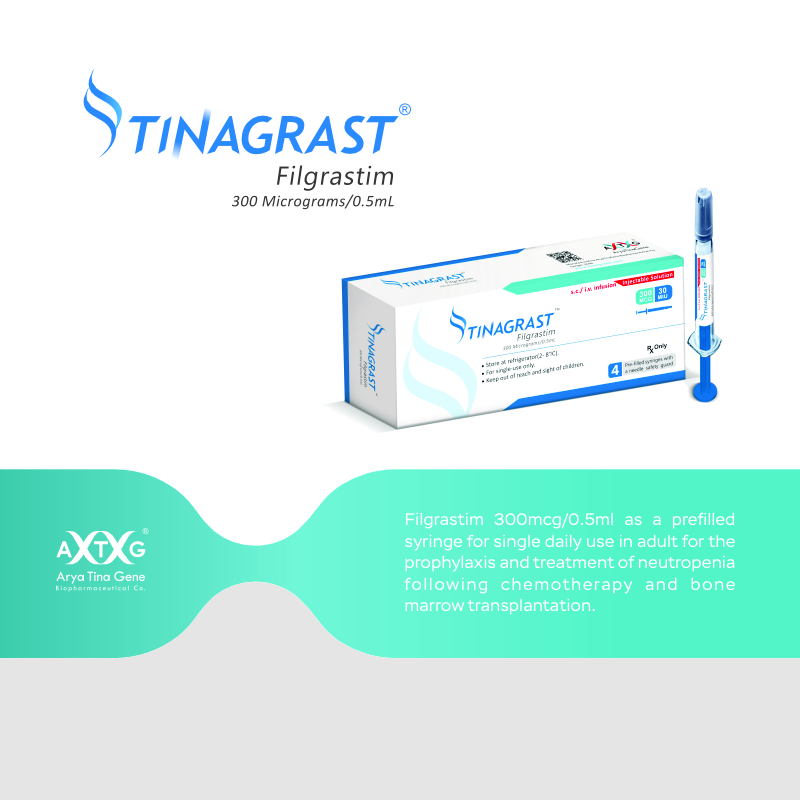


Introduction of product
TINAGRAST (filgrastim) is a 175 amino acid human granulocyte colony-stimulating factor (G-CSF) manufactured by recombinant DNA technology. TINAGRAST is produced by Escherichia coli (E coli) bacteria into which has been inserted the human granulocyte colony-stimulating factor gene. TINAGRAST has a molecular weight of 18‚800 daltons. The protein has an amino acid sequence that is identical to the natural sequence predicted from human DNA sequence analysis‚ except for the addition of an N-terminal methionine necessary for expression in E coli. Because TINAGRAST is produced in E coli‚ the product is non-glycosylated and thus differs from G-CSF isolated from a human cell. TINAGRAST injection is a sterile‚ clear‚ colorless‚ preservative-free liquid containing filgrastim at a specific activity of 1.0 ± 0.6 x 10 8 U/mg (as measured by a cell mitogenesis assay). The product is available in prefilled syringes. The single-use prefilled syringes contain either 300mcg/0.5 mL.
Indications
1) Patients with Cancer Receiving Myelosuppressive Chemotherapy
2) Patients with Acute Myeloid Leukemia Receiving Induction or Consolidation Chemotherapy
3) Patients with Cancer Undergoing Bone Marrow Transplantation
4) Patients Undergoing Autologous Peripheral Blood Progenitor Cell Collection and Therapy
5) Patients with Severe Chronic Neutropenia
6) Patients Acutely Exposed to Myelosuppressive Doses of Radiation (Hematopoietic Syndrome of Acute Radiation Syndrome)
Side effects of the drug
Each drug, along with its therapeutic effects, may also cause some unwanted side effects. Although all these complications are not seen in one person.
Storage
The medicine should be kept at a temperature of 2 to 8 degrees Celsius (in the refrigerator) and protected from freezing.
In case of freezing, the medicine can be defrosted and used only once by putting it in the refrigerator.
If the medicine is frozen more than once, it should be thrown away.
Keep the medicine in the original box away from light and avoid shaking the medicine.
Avoid taking medicines that have been left at room temperature for more than24hours.
Never use expired medicine. If you see a change in color, particles or turbidity, do not use the product.
Keep in a safe place and out of reach of children.
Consult your pharmacist or doctor if the following side effects occur: bone pain, headache, muscle pain, joint pain, diarrhea, hair loss, nausea and vomiting.
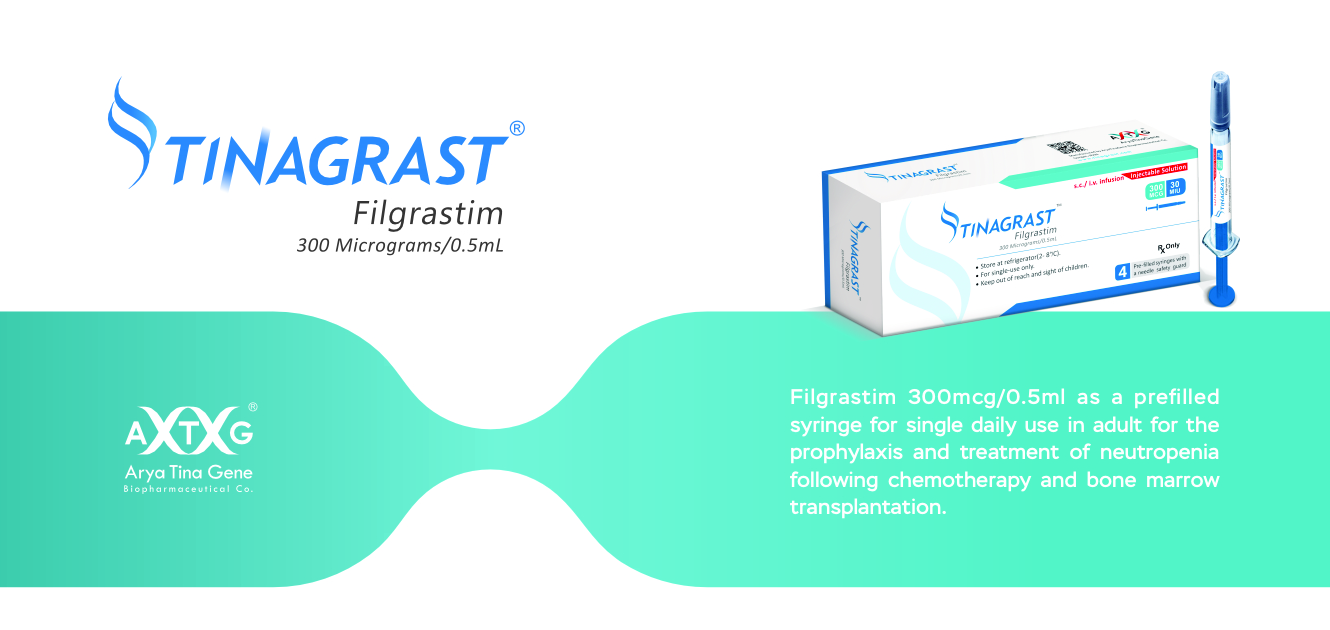


Introduction of product
TINAGRAST (filgrastim) is a 175 amino acid human granulocyte colony-stimulating factor (G-CSF) manufactured by recombinant DNA technology. TINAGRAST is produced by Escherichia coli (E coli) bacteria into which has been inserted the human granulocyte colony-stimulating factor gene. TINAGRAST has a molecular weight of 18‚800 daltons. The protein has an amino acid sequence that is identical to the natural sequence predicted from human DNA sequence analysis‚ except for the addition of an N-terminal methionine necessary for expression in E coli. Because TINAGRAST is produced in E coli‚ the product is non-glycosylated and thus differs from G-CSF isolated from a human cell. TINAGRAST injection is a sterile‚ clear‚ colorless‚ preservative-free liquid containing filgrastim at a specific activity of 1.0 ± 0.6 x 10 8 U/mg (as measured by a cell mitogenesis assay). The product is available in prefilled syringes. The single-use prefilled syringes contain either 300mcg/0.5 mL.
Indications
1) Patients with Cancer Receiving Myelosuppressive Chemotherapy
2) Patients with Acute Myeloid Leukemia Receiving Induction or Consolidation Chemotherapy
3) Patients with Cancer Undergoing Bone Marrow Transplantation
4) Patients Undergoing Autologous Peripheral Blood Progenitor Cell Collection and Therapy
5) Patients with Severe Chronic Neutropenia
6) Patients Acutely Exposed to Myelosuppressive Doses of Radiation (Hematopoietic Syndrome
of Acute Radiation Syndrome)
Side effects of the drug
Each drug, along with its therapeutic effects, may also cause some unwanted side effects. Although all
these complications are not seen in one person.
Storage
The medicine should be kept at a temperature of 2 to 8 degrees Celsius (in the refrigerator) and protected from freezing.
In case of freezing, the medicine can be defrosted and used only once by putting it in the refrigerator.
If the medicine is frozen more than once, it should be thrown away.
Keep the medicine in the original box away from light and avoid shaking the medicine.
Avoid taking medicines that have been left at room temperature for more than24hours.
Never use expired medicine. If you see a change in color, particles or turbidity, do not use the product.
Keep in a safe place and out of reach of children.
Consult your pharmacist or doctor if the following side effects occur: bone pain, headache, muscle pain, joint pain, diarrhea, hair loss, nausea and vomiting.